


Wheal Victoria Copper Mine at Golitha Falls was a short-lived Victorian copper venture in Draynes Wood on the western bank of the River Fowey, within what is now the Golitha Falls National Nature Reserve on the edge of Bodmin Moor.
It opened in 1844. At the first meeting of the mine “adventurers” (investors) at Webb’s Hotel in Liskeard, the property was reported to contain eight lodes, five of them three feet wide. A cross-cut adit soon intersected two small branches of rich copper ore, which optimists claimed was an extension of the rich lodes then being developed at South and West Caradon Mines a couple of miles to the east. After roughly two years and an outlay of about £4,000, the mine was abandoned in 1846. The Mining Journal marked its demise with the elegiac line: “All hail! Victoria! yet thy star is set.”
A second attempt began with a fresh lease in March 1851. By the following year a 30-foot-diameter waterwheel (7½-foot breast) was driving 150 fathoms of flat rods to a shaft that had been sunk 30 fathoms from surface. The old adit was reopened for 70 fathoms, a new lower adit was driven 100 fathoms, and a cross-cut was pushed toward the Lark Holes copper lode. By September 1853 the main Engine Shaft had reached 57 fathoms (about 342 feet, 40 fathoms below adit). Contemporary reports described cross-cutting on north–south veins, occasional “spots of copper,” and hopeful language about the sett being a continuation of the Caradon granite. In practice the results were poor. The last recorded sale of ore was a modest 15-ton lot at the end of 1854; by 1855 the mine had closed for good amid financial difficulties and at least one Stannary Court dispute.
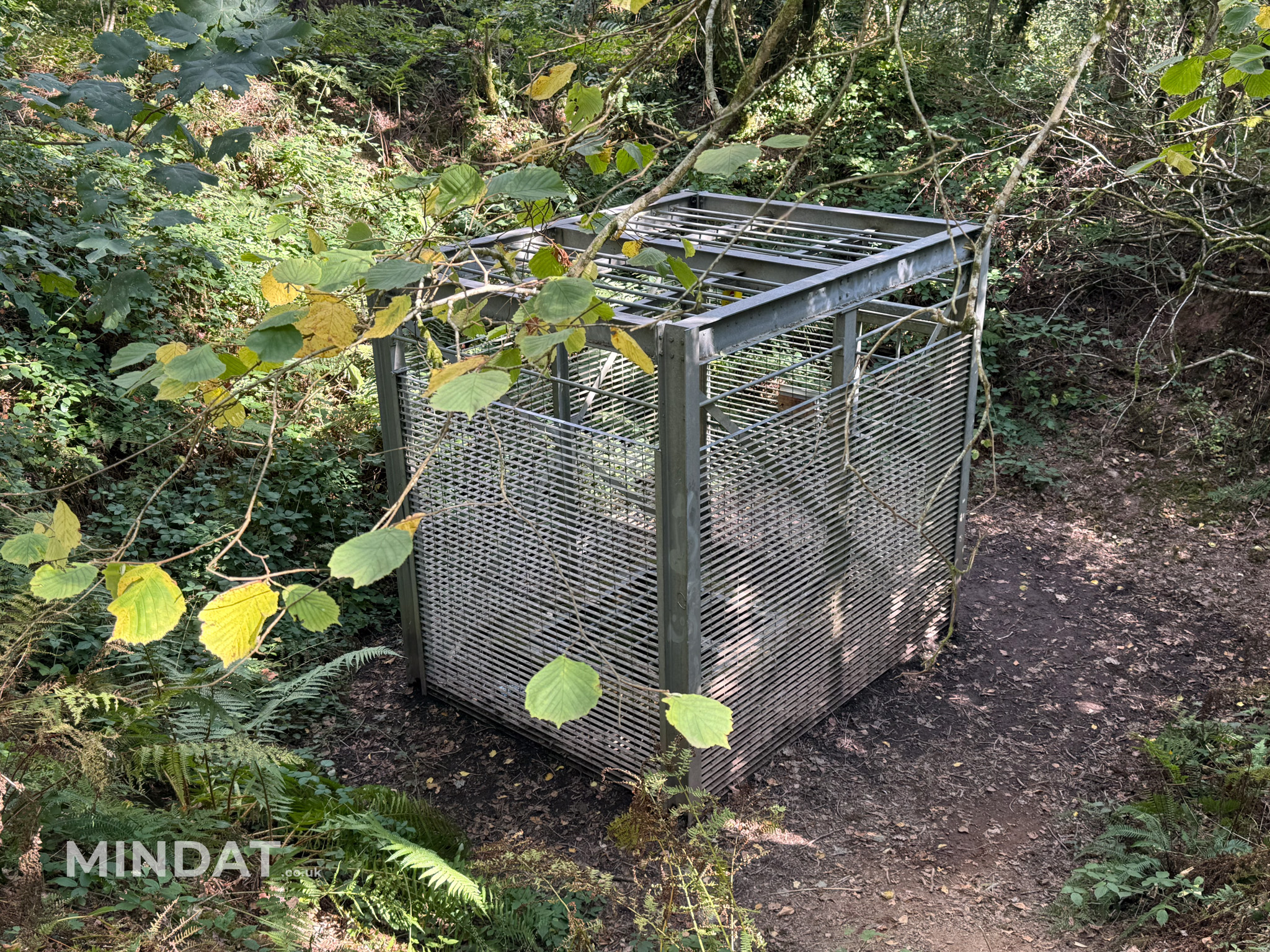
Today the most visible remains are the substantial masonry walls of two wheel-pits beside the river (once housing the large waterwheels that powered the pumping system via flat rods), several shafts now caged to allow bats in and out, and adits—one near river level by the falls and another higher in the woods. Leats that once fed the wheels and miners’ tracks can still be traced through the ancient woodland. The large pipe that crosses the reserve is unrelated: it is a later (c. 1908) china-clay slurry pipeline from the Parsons Park / Northwood pits on the moor to the dries at Moorswater.
Though never a major producer, Wheal Victoria is a classic small Cornish copper sett of the mid-19th-century boom, now quietly reclaimed by the oaks, mosses, and bats of Golitha Falls.
